Gouache Painting for Beginners: What to Buy, a First Project and Fixes
Gouache is an opaque, water-based paint that dries flat and matte. Start with red, yellow, blue and white, one sheet of thick paper and two brushes, paint a small three-hills card, and use the fix-it table when it goes wrong.
By Lionel Rutledge ·
On this page
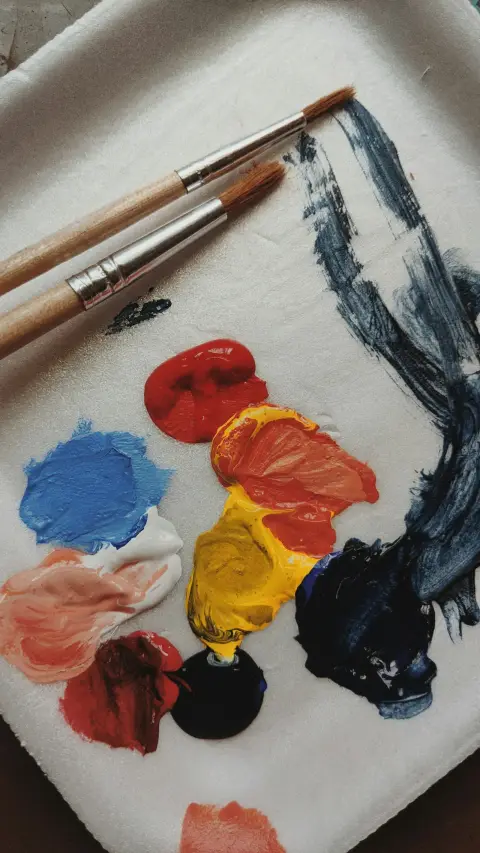
Gouache painting uses an opaque, water-based paint that dries flat and matte, so a new color can cover the one below it. To start, you need four colors (red, yellow, blue, white), one sheet of thick paper and two brushes. This guide helps you pick the right gouache, mix it to the right thickness, paint one small card and fix what goes wrong.
Say it "gwahsh" or "goo-AHSH". Wikipedia lists both English pronunciations. It describes the paint as pigment, water and a binder, usually gum arabic or dextrin, sometimes with a white filler such as chalk.
Which gouache should you buy first?
Buy traditional gouache in tubes for your first project. It is bound with gum arabic, and dry paint softens again with water, so mistakes stay fixable. Choose acrylic gouache only if you want each layer to stay put once it is dry.
Scroll sideways for all 5 columns.
| Type | Binder | Re-wets when dry? | Choose it if | Watch out for |
|---|---|---|---|---|
| Traditional tubes | Gum arabic | Yes | You want to learn layering and soften edges later | Cracks when used thick and undiluted |
| Jelly cups | Usually gum arabic | Usually; check the label | You want paint that is ready in the cup | Often sold as student grade; check the label |
| Pans or cakes | Check the label | Check the label | You paint small sketches on the go | Behavior depends on the maker, not the shape |
| Acrylic gouache | Acrylic | No | Lower layers must never lift | Dries on the brush; wash brushes at once |
| Poster paint | Usually dextrin | Check the label | You need cheap paint in volume for posters or signs | A cheaper cousin, not artist gouache |
Makers describe the difference in plain words. Reeves: "Gouache can be reactivated with water, allowing for corrections." Liquitex says its acrylic gouache dries to a flat, matte finish that is "permanent and water-resistant". Dear Elaine's beginner guide calls jelly gouache traditional gouache "in little pudding cups" and warns that budget paints usually have more fillers and may fade. The poster paint row comes from Wikipedia's history of the cheaper dextrin-bound paint.
Is gouache better than acrylic? Neither is better. They behave differently. Traditional gouache stays workable after it dries, and that forgives a beginner. Acrylic paint and acrylic gouache lock each layer in place.
Jelly or tubes? Tubes for this first project. Jelly cups are fine if you already own them; just check whether the set is sold as student or artist grade.
My pick: a small set of traditional tubes, student grade is fine for practice. You will use more paint than you expect, and that is normal.
Gouache and watercolor share a binder and mix well. Winsor & Newton calls its gouache "fully intermixable with watercolour". The difference is light: watercolor is see-through and lets the paper glow, gouache covers it. If you are still choosing between the two, our gouache vs watercolor comparison has the side-by-side table and a quick decision guide.
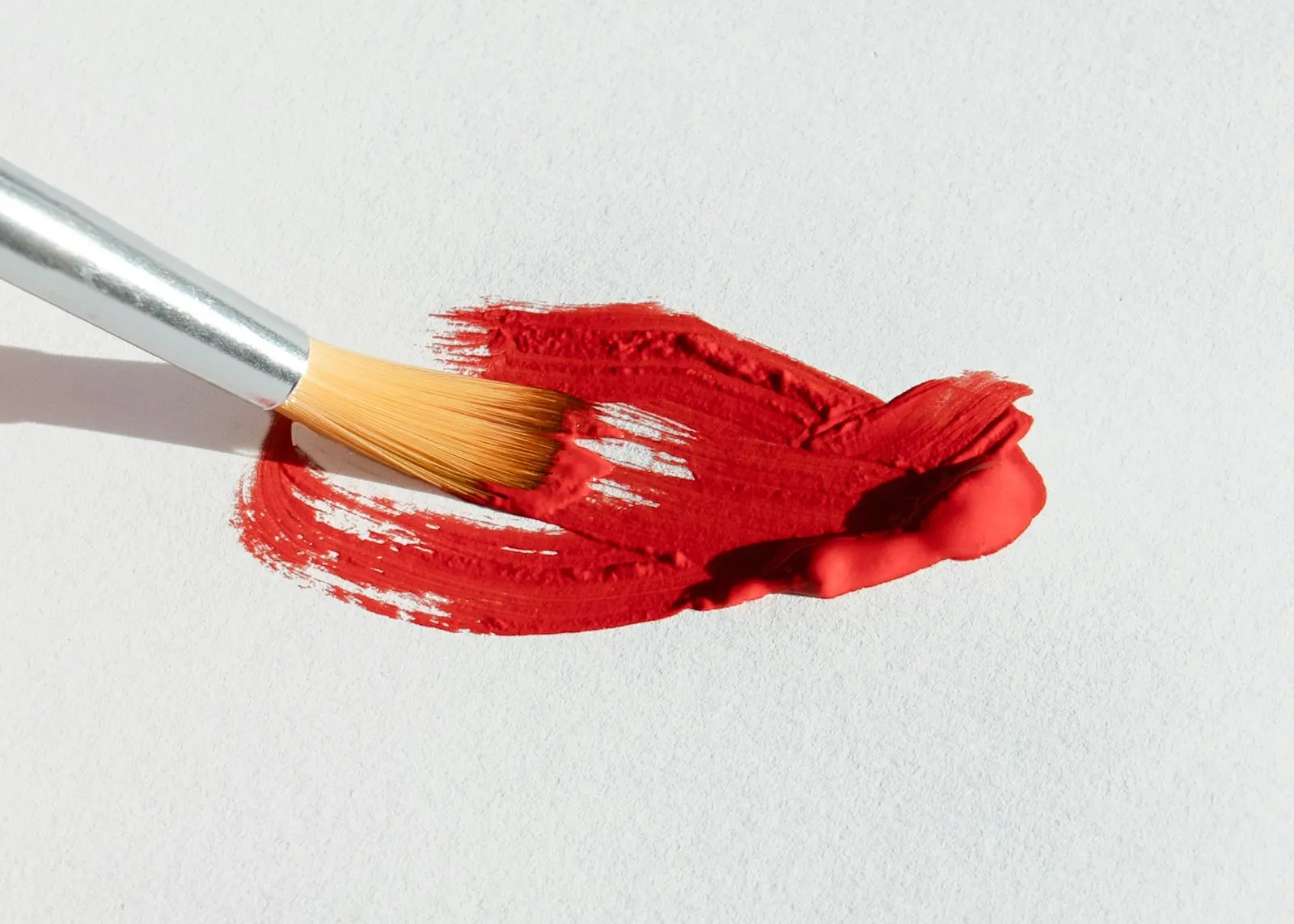
What you need for your first gouache card
- Four tubes
- A blue, a red, a yellow and white. Mixing every other color is half the lesson.
- Two brushes
- A flat brush about 12 mm (1/2 in) wide for big areas, a round brush around size 6 for edges. Synthetic is fine.
- Paper
- One sheet of watercolor or mixed-media paper, about 13 × 18 cm (5 × 7 in). I suggest 300 gsm (140 lb) or heavier, because thin paper buckles when wet. For practice after this card, a mixed-media or watercolor sketchbook of similar weight works well.
- Palette
- A white plate. White shows the true color of a mix.
- Water and towel
- Two jars of water (one to rinse, one clean) and a paper towel.
- Tape
- Low-tack masking tape to hold the paper flat on all four sides.
Gouache sits on the surface of the paper instead of soaking in. Cowan's explains that its pigments are coarser than watercolor pigments. The water in your mix still soaks into the paper, though, so heavier paper with taped edges stays flatter.
Skip for now: a 24-color set, a black tube (blue plus red makes a livelier dark), mediums, varnish, an easel and special palettes. Buy one of these only when a project actually needs it. A stay-wet palette is a good example: a lidded tray with a damp sponge under thin palette paper. It earns its place only once paint keeps drying out on your plate between sessions.
Why some colors will not cover the layer below
Gouache is called opaque, but opacity differs by color. On 13 Nov 2026, the Winsor & Newton Designers Gouache color table listed 89 colors: 65 rated opaque, 22 semi-opaque, Magenta semi-transparent and Viridian transparent.
The semi-opaque group holds many of the colors a beginner reaches for. In that table, Lemon Yellow, Primary Yellow and Primary Red are rated semi-opaque, while Primary Blue, Ultramarine and Permanent White are opaque.
That changes your painting order. Paint yellows and bright reds on white paper or on a light layer, not over a dark shape. To lighten a dark area, mix in white, which covers well. Every brand rates its colors differently, so check the code on your own tubes.
How much water to mix with gouache
Add a little water to almost every mix. Tube paint used straight is thick, and thick paint cracks. Winsor & Newton names this as the first cause. "If insufficient water is used to dilute the colour, the thicker film may crack as the paint dries on the paper." The same page notes that the amount of water "will differ with each colour", so judge by look, not by a ratio.
These three stages are my suggestion for this card, not a maker's rule:
- Tea: thin and runny, almost watercolor. Use it only for a quick first wash.
- Milk to light cream: the paint leaves a solid, even stroke. Use it for most flat shapes.
- Soft butter: creamy, but still wetter than straight from the tube. Use it for small details on top.
Go thin first and a little thicker for each later layer. Water also changes coverage: Reeves advises less water for an opaque look and more water for a watercolor-like effect.
Before you open the tubes, read the label of each color. In the US, art materials can carry an ACMI seal. The AP seal marks products certified by a board-certified toxicologist. The CL seal means the label carries cautions: read it in full before opening. Keep paint away from food, do not shape the brush tip with your lips, and wash your hands when you finish.
First project: three hills at sunset
You will paint a warm sky, three hills and a small sun on one 13 × 18 cm card. In our rough estimate, that is about 45 minutes of painting plus drying breaks; your pace may differ. This is a proposed exercise, not a record of a painting we made. The order is the lesson: light colors first on white paper, then hills from far to near, each one covering the edge of the hill behind it.
- Tape and mix. Tape the paper flat on all four sides. If you like, draw the three hill lines lightly in pencil first; opaque paint will cover them. Squeeze out a pea-sized blob of each color. Add water a drop at a time until the paint is at the milk stage. Check: a loaded brush leaves a solid stroke, not a see-through one.
- Make a strip of test swatches. On a scrap of the same paper, paint yellow, then yellow plus red, then blue plus red plus white. Let them dry. You will compare against these later, because colors shift as they dry.
- Paint the sky. Pale yellow (yellow plus a little white) across the lower half of the sky, orange (yellow plus red) above it. Brush the join together while both are wet. Cover the whole card, including where the hills will go; they will cover the lower part later. Yellow goes on white paper here, where it shows at full strength. This thin first layer that later, more opaque layers cover is called an underpainting. Keep it thin and keep light areas like this one out of the dark mixes.
- Stop and check the sky. Wait until it is dry. Our rough guess is 10 to 20 minutes for a thin layer, but room and paper change that. Touch a corner with a clean, dry fingertip. If it feels cool or damp, wait longer. Painting over a damp layer lifts the color and turns it muddy. Your palette blobs will skin over during the break too. Traditional gouache comes back with a drop of water and a stir. Acrylic gouache will not, so squeeze out only small amounts of it.
- Paint the far hill. Mix blue, a little red and plenty of white into a pale violet-gray. Use it a touch thicker than the sky. Paint one long wavy shape across the lower half of the card.
- Paint the middle hill once the first is dry. Add more blue and red to the same mix, so the color is a step darker. Overlap the bottom edge of the far hill with one confident stroke. Do not scrub: a wet brush can soften the dry layer underneath.
- Paint the nearest hill. Use the darkest mix, with the least white. Fill the bottom of the card.
- Add the sun. Mix white with a touch of yellow and paint a small circle in the sky, slightly thicker than the other layers. White covers well, so a pale sun sits cleanly on the orange. Keep it small, because thick paint is where cracks start.
- Peel the tape. Once everything is dry, pull the tape slowly at a low angle, away from the painting. A clean white border appears.
What "good" looks like: a warm sky, three flat, matte hills that step from light to dark, and a small pale sun. Wobbly hill edges are fine. Even, solid color is the skill you are practicing here.
A heavy blob of gouache on paper is not a painting. It is a very small sculpture, and it will crack.
Cleaning up: rinse the brushes before the paint dries on them and wipe them on the towel. Traditional gouache left on the plate softens again with a few drops of water next time. Acrylic gouache does not, so wash those brushes straight away. Wipe tube threads before you close the caps, or they can glue shut.
Keeping the card: store it dry, flat and out of direct sun, with a sheet of paper on top. Traditional gouache re-wets, so a drip of water can mark it. Cheaper paints may fade. Makers often publish a permanence or lightfastness rating for each color, on the tube or in their color chart.
When gouache goes wrong: symptom, cause, fix
Most problems come from three things: too little water, painting over a layer that is still damp, and too many colors in one mix. Check them in that order. The fix is usually a thinner mix or a longer wait, not a new product. This is also the honest answer to "why is gouache so hard?": it punishes thick paint and impatience, and it rewards a little planning.
Scroll sideways for all 4 columns.
| Symptom | Likely cause | Quick check | Fix |
|---|---|---|---|
| Cracks in dry paint | Paint too thick, or the lower layer soaked up binder from the wet layer on top | Do the cracks follow thick ridges or sit over an earlier layer? | Lift the cracked patch with a damp brush and repaint thinner; dilute more next time |
| Lower layer smears into the new one | Traditional gouache re-wets, so a wet brush dissolves the dry layer | Was the layer fully dry? Was the brush dripping? | Wait, then use less water and one stroke instead of scrubbing |
| Light color looks weak over a dark shape | Several yellows and reds are only semi-opaque | Look up the opacity code on the tube | Paint the light shape on white paper first, or lighten with white |
| Colors look muddy | Too many colors in one mix, or dirty rinse water | Count the colors in the mix | Remix from two colors plus white; change the rinse water |
| Color changed after drying | Light colors tend to dry darker, dark colors lighter | Compare with your dried swatch strip | Test each mix on a scrap and let it dry before you commit |
| Streaky flat areas | Paint too thin, or the brush ran dry mid-stroke | Hold the card up: can you see paper through it? | Use less water, load the brush fully, paint the shape in one pass |
| Paper waves or buckles | Thin paper and too much water | Does the sheet curl as soon as it is wet? | Use heavier paper, tape all four sides, press it flat under books when dry |
Both cracking causes come from the same Winsor & Newton page: thick films crack, and later layers "may show cracking if the under layer absorbs binder from the wet colour". The drying shift comes from Cowan's: "lighter hues dry darker, while darker hues dry lighter". Brands differ here too. Schmincke says its HORADAM Gouache "undergoes minimal tonal lightening" on drying, which is one more reason to trust your own swatch strip over any rule.
Cowan's also suggests spraying a workable fixative on a base layer before you rework it. A fixative is a spray that seals the surface. Follow the can's label, spray in a well-ventilated place and try it on a scrap first, because it changes the surface. If a painting is old or valuable, do not experiment on it: ask a paper conservator.
Your next small exercise
Paint the hills card again, but swap the palette: blue, yellow and white only. Mix three greens from light to dark and use one for each hill. That teaches value, which means how light or dark a color is, and value is what makes the hills look far or near. On the nearest hill, try dry brushing: wipe most of the paint off the brush, then drag it lightly upward for a grassy texture.
If the shapes themselves feel shaky, more paint will not help. Fifteen minutes a day with our drawing plan for beginners trains the hand and the eye for every later painting.